
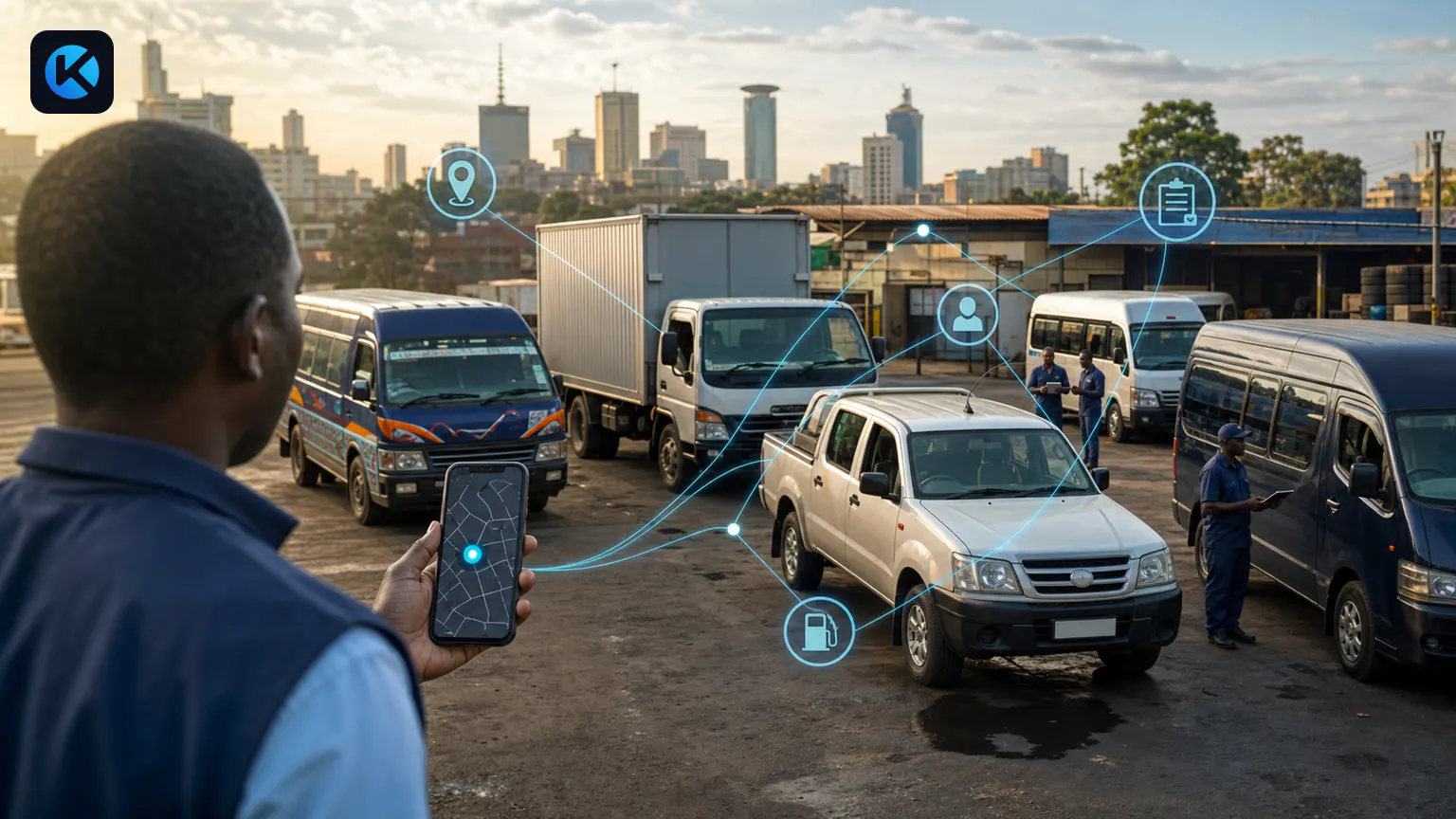
GPS tracking shows where a vehicle is and how it moved. Fleet management software uses that location alongside dispatch, drivers, fuel, maintenance, compliance, clients, and costs to help a company run the whole fleet.
They are not competing technologies. GPS tracking is a data source; a fleet management system is the operating layer that turns vehicle data into assignments, alerts, records, and decisions.
A vehicle's position on a map does not tell you everything you need to know. It does not explain whether the vehicle is assigned to the right job, whether the driver has completed the trip, whether maintenance is overdue, whether fuel costs are rising, or whether that vehicle is actually profitable.
That distinction matters for Kenyan transport, delivery, school, and field-service fleets that already have trackers but still coordinate daily work through calls, WhatsApp, paper files, and separate spreadsheets.
GPS tracking vs fleet management software at a glance
| Capability | GPS tracking | Fleet management software |
|---|---|---|
| Primary purpose | Show vehicle location and movement | Run the operation around each vehicle |
| Dispatch and jobs | Usually not included | Assign trips, drivers, clients, routes, and statuses |
| Fuel and costs | May expose sensor data | Connect fuel, expenses, invoices, and trip profitability |
| Maintenance | May report mileage | Schedule service, record work, costs, parts, and reminders |
| Driver management | Identifies a vehicle or device | Connects drivers to assignments, records, and performance |
| Best fit | Basic location visibility | Growing fleets that need operational and financial control |
What GPS tracking does
GPS tracking helps you monitor vehicle location and movement. A GPS tracking system can help you answer questions like:
- Where is the vehicle right now?
- Is the vehicle moving or parked?
- Has the vehicle left a certain area?
- What route did the vehicle take?
- When did the vehicle arrive?
This is useful, especially for companies that manage trucks, vans, motorcycles, field teams, or delivery vehicles. But GPS tracking is only one layer of fleet visibility.
What fleet management software does
Fleet management software goes beyond location. It helps a company manage the wider operation around the vehicle — dispatch, driver assignments, trip records, vehicle documents, maintenance schedules, expenses, reports, and performance tracking.
Instead of only asking, “Where is the vehicle?” fleet management software helps answer:
- What job is this vehicle assigned to?
- Who is driving it?
- Is the trip delayed?
- Has the customer been updated?
- Is the vehicle due for service?
- What is this vehicle costing the business?
- Which drivers are performing well?
- Which vehicles are underused?
- Where are we losing money?
That is the difference between watching vehicles and managing a fleet.
For a fuller explanation of the operating layer, read what fleet management software is and how it works.
Why GPS tracking alone becomes limited
GPS tracking is valuable, but many companies eventually reach a point where tracking alone does not solve the bigger operational problems.
You may know where a truck is, but still not know why the delivery is delayed. You may know that a van moved, but not whether it was assigned to an approved job. You may know that a motorcycle reached a location, but not whether the delivery was completed. You may know that a vehicle is active every day, but not whether it is profitable.
This is why companies need a system that connects vehicle movement with business context.
GPS tracking tells you where your vehicle is.
Kora Fleet helps you understand what is happening across your fleet — dispatch, drivers, routes, maintenance, costs, and performance — from one connected platform.
Why fleet management software is better for growing companies
As a transport business grows, the number of moving parts increases. More vehicles. More drivers. More customers. More routes. More repairs. More fuel costs. More reports. More mistakes waiting to happen in the gaps between disconnected tools.
Fleet management software helps organize these moving parts into one system. It gives managers, dispatchers, finance teams, and owners a clearer view of daily operations. This helps companies respond faster, reduce waste, improve accountability, and make better decisions.
Can existing GPS trackers connect to fleet management software?
Often, yes. Compatibility depends on the tracking provider, device protocol, data access, and the quality of the available telemetry. A fleet may be able to keep compatible installed trackers and connect them to a wider fleet platform instead of replacing every device.
When comparing options, ask whether software, SIM connectivity, hardware, installation, fuel sensors, and support are bundled or priced separately. Kora Fleet's current software plans and tracking rollout options explain those boundaries directly.
Final thought
If your company only needs to see vehicle location, GPS tracking may be enough for now. But if you are trying to reduce costs, improve dispatch, manage drivers, track maintenance, serve customers better, and understand fleet performance, then you need more than dots on a map.
You need a fleet management system.
Frequently asked questions
What is the difference between GPS tracking and fleet management software?
GPS tracking shows vehicle location and movement. Fleet management software connects location with dispatch, driver assignments, maintenance schedules, fuel costs, and business performance — giving a much fuller picture of fleet operations than location alone.
What can GPS tracking tell you?
GPS tracking can report position and movement history when the device and connection work. Check the last-update time: a stale location is not proof of current position. Arrival and departure estimates also depend on the configured site boundary.
What does fleet management software do that GPS tracking cannot?
Fleet management software helps you manage trip assignments, driver records, vehicle maintenance, fuel accountability, client invoicing, document compliance, and performance reporting — not just vehicle location.
Is GPS tracking enough for a growing transport business?
Tracking may be sufficient when location is the main need. Wider software can help when dispatch, documents and costs require shared records, but it is not a guarantee of profitability. Compare the actual workflows and cost of each option.