
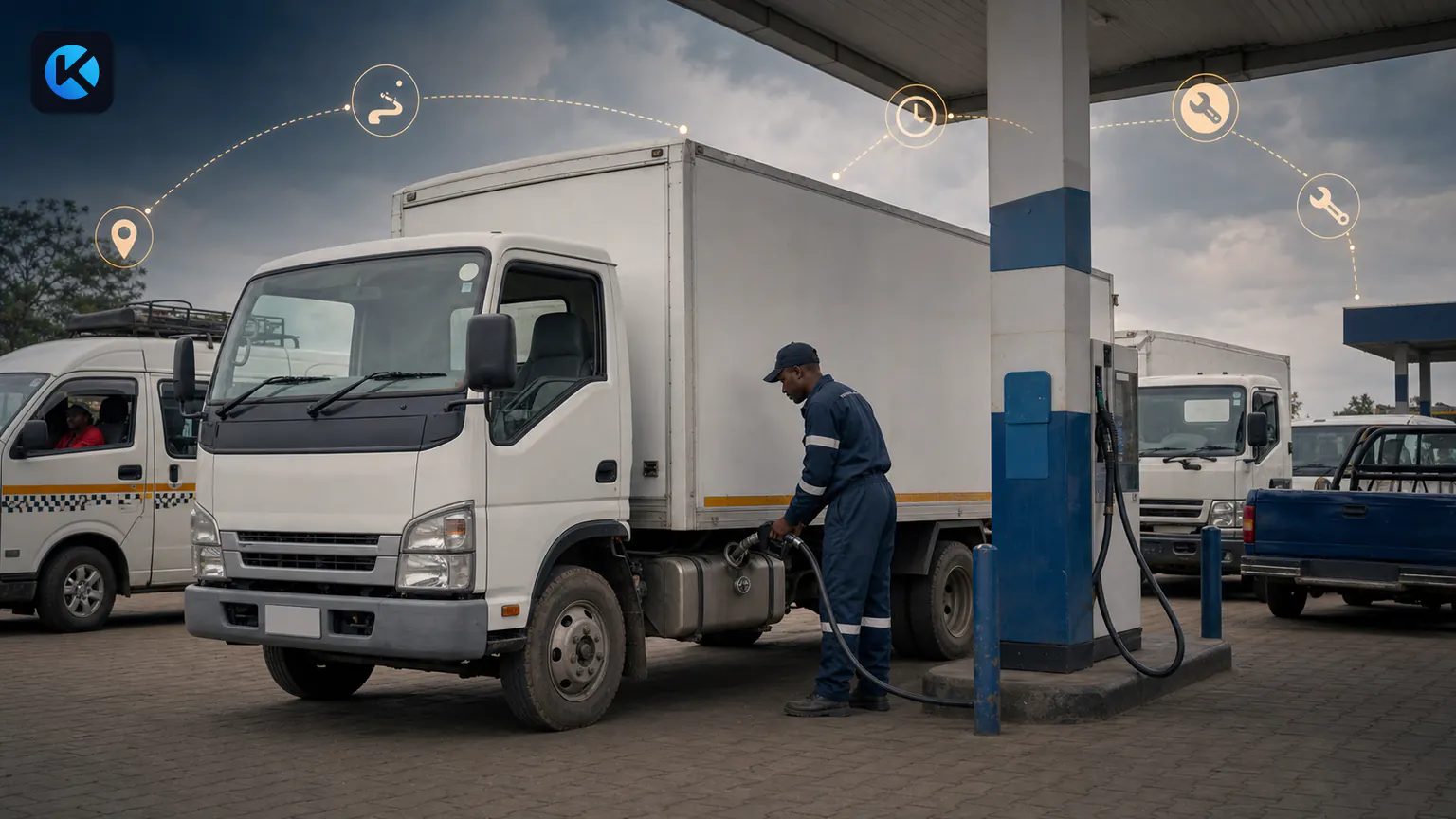
Fuel is often the largest single operating cost for a transport company. It is also one of the hardest costs to fully verify.
Fuel records can contain missing purchases, incorrect distances or inconsistent measurement windows. Reconcile the underlying records before deciding whether a budget variance represents physical loss.
But that variance has a source. Usually several.
Unnecessary trips
Not every kilometre a vehicle covers generates revenue. Vehicles dispatched without a proper assignment, sent on errands that were not logged, or left running without accountability create fuel spend that never connects to a job. Without clear dispatch records, it is difficult to know which trips were planned and which were not.
Poor route planning
When drivers choose their own routes without guidance, longer roads and avoidable stops are common. A 20km detour might seem minor, but across a fleet running multiple trips daily, poor routing adds up quickly. Route visibility helps operations teams see the paths vehicles actually take and identify patterns that suggest unnecessary distance is being covered.
Excessive idling
An idling engine consumes fuel. Some idling supports safety, operating conditions or auxiliary equipment; identify avoidable idle time instead of treating every stationary engine minute as waste.
Delayed maintenance
Tyre pressure, engine condition and maintenance can affect fuel use and reliability. Follow manufacturer procedures and investigate the actual fault; a clogged fuel filter can cause performance problems or a breakdown but does not invariably increase consumption.
Unverified fuel receipts
Fuel receipts can be easy to manipulate. A driver who fills half the tank and submits a full-tank receipt generates a gap between what was filled and what was recorded. Over time, small gaps add up. Fuel log records that capture odometer readings alongside fill amounts allow companies to cross-check whether the litres filled match the distance covered since the last fill.
Weak driver accountability
When drivers know that fuel records are not reviewed, the incentive to be careful with fuel diminishes. This is not always about dishonesty — sometimes it is simply about habits that form in the absence of any feedback loop. When drivers understand that fuel records are tracked, reviewed, and connected to trip activity, both the culture and the numbers tend to improve.
Visibility is the first step to controlling fuel costs.
Kora Fleet gives your team a clearer view of vehicle usage, routes, driver activity, and fuel records so you can spot waste before it becomes normal.
What visibility changes
Better fuel records do not prevent all fuel waste instantly. But they create the conditions for earlier detection.
When a vehicle's fuel consumption suddenly rises, it appears in the data. When a fill is disproportionately large for the distance covered, it gets flagged. When patterns repeat across specific drivers or specific routes, the picture becomes clear enough to act on.
Visibility is not the same as control. But without visibility, fuel control is mostly wishful thinking.
Frequently asked questions
How do transport companies lose fuel without obvious theft?
Fuel is lost through unnecessary trips with no revenue assignment, poor route planning that adds avoidable distance, excessive engine idling, delayed maintenance that reduces fuel efficiency, unverified fuel receipts, and weak driver accountability where fuel use is never reviewed.
How can I tell if fuel is being siphoned from my vehicles?
Unexplained level drops or consumption changes can justify investigation, but do not prove siphoning. First check partial fills, transfers, leaks, route and payload changes, auxiliary use and sensor accuracy; then review corroborating records fairly.
How can fleet management software reduce fuel costs?
Fleet software tracks every fuel fill with the corresponding odometer reading, flags anomalies like excess fills or mileage mismatches, and gives managers a full record of every fuel transaction. This creates accountability that discourages waste and makes manipulation much harder to sustain.
Does vehicle maintenance affect fuel consumption?
Maintenance and tyre condition can affect efficiency and reliability. Follow the vehicle-specific schedule and diagnose changes in consumption alongside route, payload and idling. Do not infer a particular mechanical fault from fuel figures alone.