
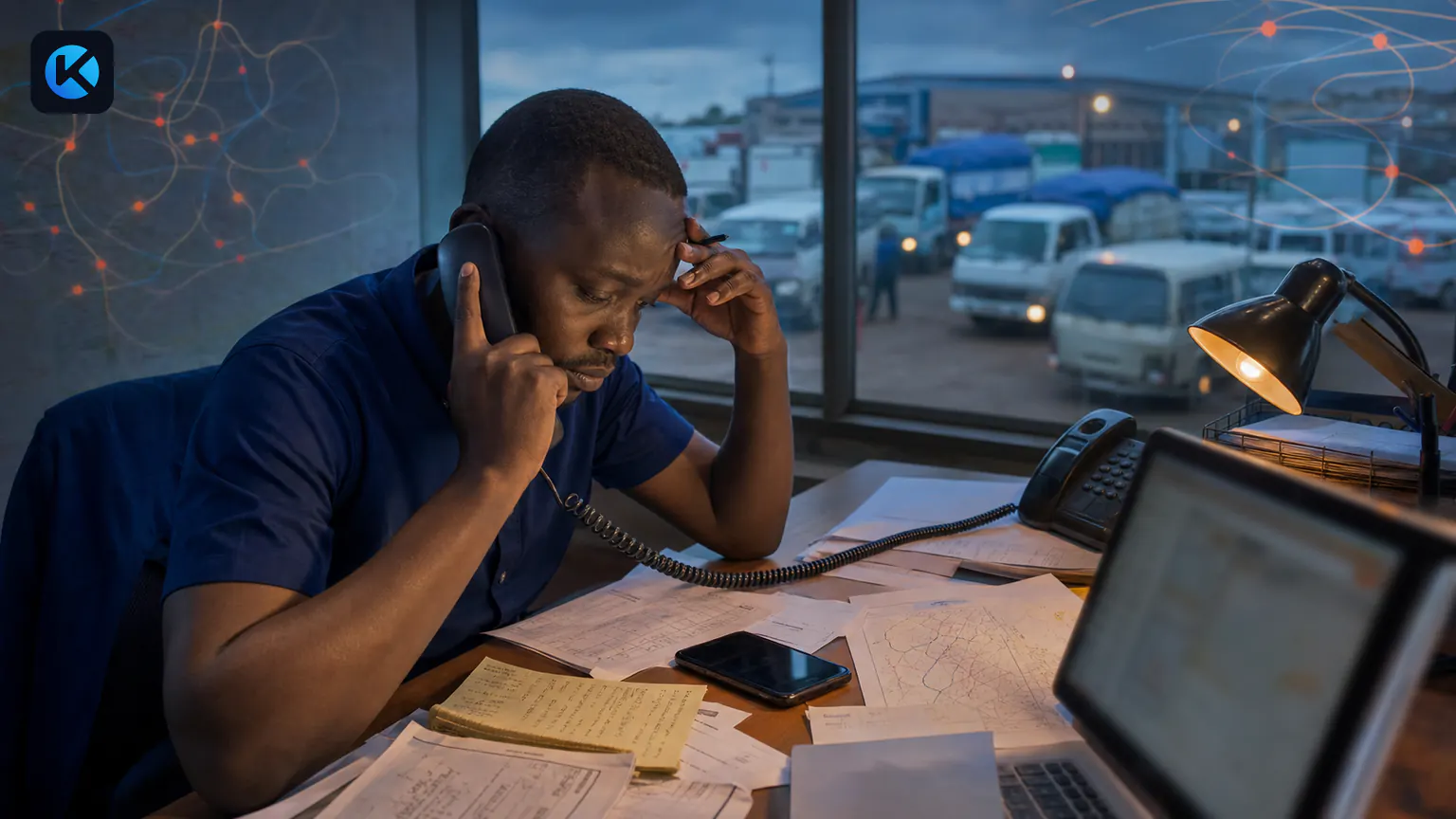
Most transport companies start dispatch the same way. Someone keeps a list. Drivers call in. Assignments go out over WhatsApp. Progress updates come in the same way they left. The person in charge holds everything together in their head.
This works — until the fleet grows, the calls multiply, and the person holding it all together cannot be in two places at once.
Manual dispatch does not feel expensive. There are no software subscriptions, no setup fees, no training costs. But the cost is real. It just shows up in different places.
Slow decision-making
When dispatch runs through phone calls and messages, every decision takes longer than it should. Checking which vehicle is available requires calling the driver. Confirming a route requires a separate call. Updating a client requires finding the thread from two days ago. Time spent coordinating is time not spent moving cargo. For a fleet running multiple trips daily, slow decisions compound quickly.
Poor vehicle allocation
If availability is unclear, dispatch can overuse familiar vehicles or overlook suitable alternatives. Review assignments and idle capacity to find whether this is happening before attributing a cost to it.
Missed driver updates
In a manual dispatch system, updates travel by message and call. A driver who is delayed calls in. A driver who has completed a trip sends a message. A driver who needs help might not communicate at all until the problem is serious. When updates are missed or arrive late, the downstream effects hit clients, schedules, and the next assignment in the chain.
No proper record trail
Paper registers and spreadsheets can preserve usable dispatch records when maintained consistently. Problems arise when assignments and changes stay in scattered conversations, leaving gaps that make later review or dispute resolution difficult.
Customer dissatisfaction
Clients want updates. When dispatch is manual, updates are approximate. Arrivals are "around 2pm." Confirmations come after the fact. Delays are communicated late, if at all. For logistics companies that serve businesses, this friction erodes relationships over time. The clients who are easiest to keep are the ones who always know what is happening.
Run dispatch from one command center.
Kora Fleet helps dispatch teams assign work, monitor active trips, and coordinate vehicles without relying only on calls, WhatsApp, and spreadsheets.
What a dispatch dashboard changes
A dispatch dashboard does not replace the judgment and coordination skills of a good operations team. It gives that team a cleaner surface to work with.
Available vehicles are visible without making calls. Assignments can be released and tracked without a message chain. Active trips can be monitored without waiting for driver updates. Client-facing updates can be based on real status rather than estimates.
The work still takes skill. The system just makes the information available faster.
Frequently asked questions
Why is manual dispatch expensive for transport companies?
Fragmented dispatch can increase coordination time, obscure availability and leave incomplete records. These are risks to measure in your own operation, not inevitable outcomes of using paper or WhatsApp.
What are the hidden costs of managing dispatch through WhatsApp?
The main costs are time lost coordinating by call and message, vehicles underused because availability is never clearly visible, trips completed with no record trail, delays communicated to clients only after the fact, and the absence of any data that could help management improve decisions over time.
What does a dispatch management system do?
A dispatch management system gives operations teams a central dashboard where vehicle availability is visible, assignments can be created and tracked, active trips are monitored in real time, and records are preserved automatically — replacing the back-and-forth of manual coordination.
When should a transport company move from manual to digital dispatch?
Consider a change when concurrent work, handovers or record gaps create measurable problems. There is no verified five-to-eight-vehicle threshold; a disciplined small team may manage well with a shared register.