
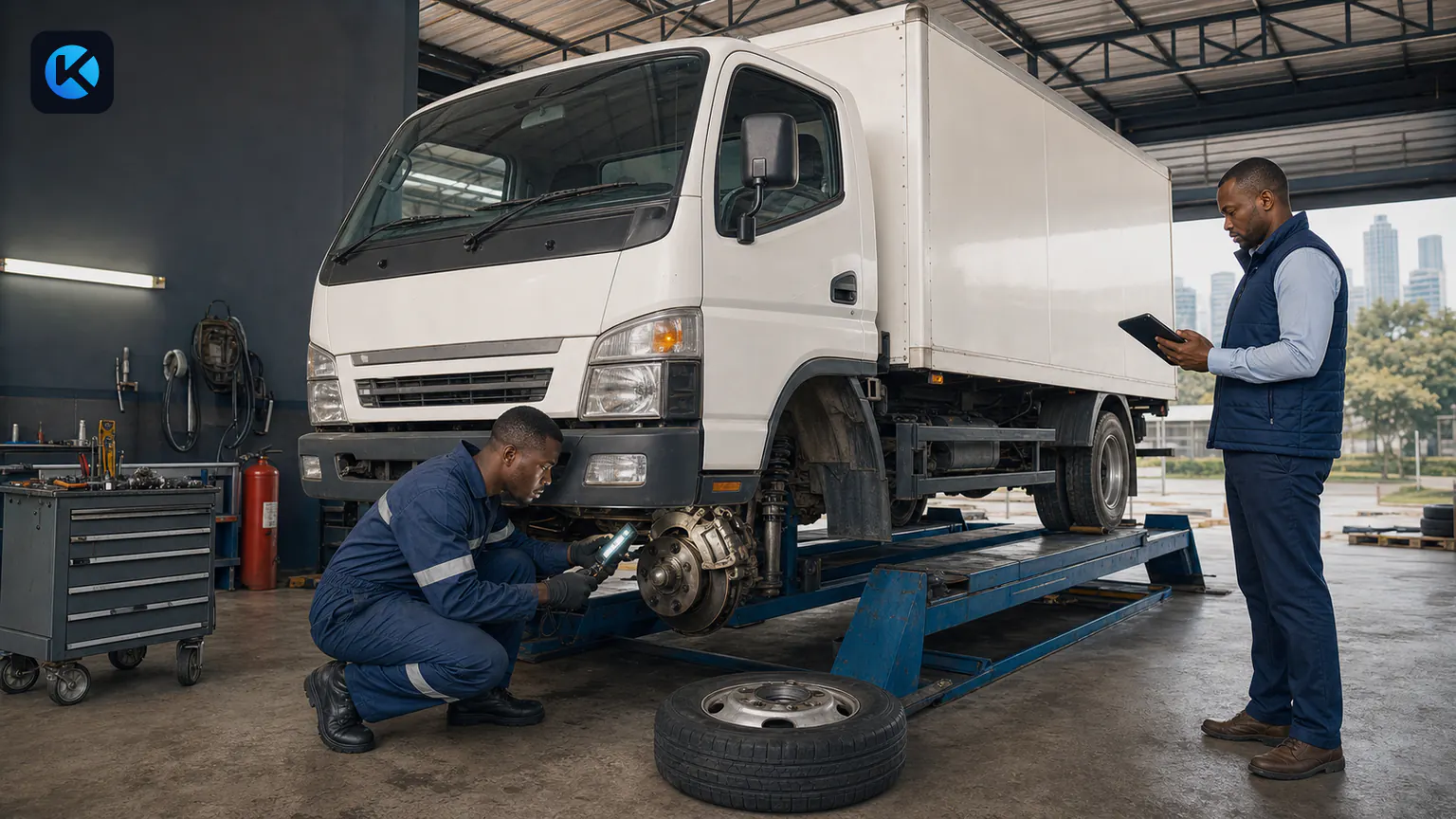
Vehicle downtime is the time a fleet vehicle is unavailable for the work it was expected to perform. It can be planned, such as scheduled servicing, or unplanned, such as a breakdown, accident, missing part, or repair that takes longer than expected.
The goal is not zero downtime. Commercial vehicles need inspections, servicing, tyres, and repairs. The goal is to reduce avoidable downtime, shorten workshop delays, and schedule necessary work when it causes the least operational disruption.
Fleet maintenance records make that possible by showing what is due, what failed before, how long each repair took, what it cost, and whether the same issue is returning.
How to measure vehicle downtime
Start with the hours a vehicle was scheduled to be available and the hours it was unavailable. A simple monthly measure is:
Downtime rate = unavailable hours within the scheduled availability window ÷ total scheduled vehicle-hours × 100
Record the start and end time, reason, planned or unplanned status, affected trip, workshop, parts delay, labour and parts cost, and return-to-service approval. Without consistent timestamps, a fleet can count repair bills but not the operational delay.
What downtime actually costs
Assess repair, recovery, replacement transport and disruption costs separately. For lost work, distinguish forgone revenue from lost contribution after avoided costs; do not count both as separate losses.
The lost revenue
A vehicle that is not moving cannot complete jobs. Every trip that vehicle was scheduled for either falls to another vehicle — often one that is less well-suited for the job — or is delayed, reassigned, or cancelled. In a fleet with tight capacity, one vehicle off the road can disrupt the entire schedule for the day.
The customer impact
Downtime creates delays. Delays create calls. Calls require explanations. Some clients accept the explanation; others remember it. Transport companies build their reputations on reliability. A vehicle breakdown that disrupts a client's supply chain is damage that can take months to repair.
The operational disruption
When a vehicle breaks down, the driver is unavailable. The dispatch team has to reorganize. Other drivers may need to extend their shifts or take on different routes. Managers spend time coordinating the recovery instead of running the business. The operational cost of a breakdown is paid in hours, not invoices.
Fixed costs keep running
Insurance, licensing, and vehicle financing do not pause when a vehicle is in the workshop. The vehicle is costing money while it is unable to generate any.
Track maintenance before breakdowns track you.
Kora Fleet helps companies keep vehicle records, service schedules, maintenance history, and reminders in one place so problems surface before they become expensive.
Why maintenance records change the equation
Some failures develop from defects or missed maintenance that a team can identify earlier; others occur without a useful warning. Record reported faults and act on them, while keeping a recovery plan for unexpected breakdowns.
Maintenance records help companies see the history of each vehicle clearly. When the last service was, what was done, what was flagged, when the next service is due. When this information is organized and visible, the team can act before a minor issue becomes a major one.
Service schedule reminders mean overdue maintenance does not get lost in the noise of daily operations.
Vehicle condition notes help mechanics carry context between jobs so nothing falls through the gap.
Cost tracking across repairs helps managers see which vehicles are becoming a financial liability rather than an asset.
Early diagnosis can allow a planned repair, but savings depend on the fault, repair and operational alternatives. Do not assume every failure can be predicted.
7 ways to reduce vehicle downtime
- 1
Track service intervals by date and odometer
Set the next service target when work is completed, then update odometer readings regularly so approaching maintenance is visible before a vehicle becomes overdue.
- 2
Capture driver defects immediately
Give drivers a simple way to report warning lights, tyre damage, unusual fuel use, braking changes, leaks, and noises while the details are still fresh.
- 3
Separate planned from unplanned downtime
A scheduled service window is different from a roadside breakdown. Recording the type shows whether availability problems come from maintenance planning, parts, workshop delays, or unexpected failures.
- 4
Keep complete repair history by vehicle
Repeated work on the same component is a pattern, not a new incident. Repair history helps a fleet manager spot recurring faults and compare maintenance cost between vehicles.
- 5
Record workshop status and parts blockers
Track when a vehicle entered the workshop, diagnosis, approval, parts ordered, repair start, testing, and release. This exposes time lost to approvals or unavailable parts.
- 6
Plan maintenance around dispatch
Share upcoming service needs with dispatch so work can be assigned around the maintenance window instead of discovering the conflict after a trip is booked.
- 7
Review downtime and cost every month
Compare unavailable hours, lost trips, repair spend, repeat faults, and service compliance. The trend matters more than a single breakdown.
Where fleet management software helps
A fleet management system connects vehicle availability to dispatch, driver defect reports, odometer readings, workshop jobs, service reminders, parts and repair costs. That makes maintenance part of the daily operating plan instead of a separate spreadsheet reviewed after a breakdown.
Read how fleet management software works, or review Kora Fleet's maintenance and vehicle management features.
Frequently asked questions
How do maintenance records reduce vehicle downtime?
Maintenance records let fleet managers see upcoming service intervals, track repair history across every vehicle, and catch recurring problems before they cause breakdowns — shifting from reactive emergency repairs to planned servicing that keeps vehicles operational and on schedule.
What does vehicle downtime actually cost a transport company?
Possible costs include repairs, towing, replacement capacity and the contribution lost on work that cannot be fulfilled. Fixed costs continue, but avoid counting them twice when estimating total impact. The amount depends on the event and available alternatives.
What should a fleet maintenance record contain?
A complete maintenance record should include the service date, odometer reading at service, work performed, parts used with costs, labour costs, the mechanic who performed the work, and the next scheduled service interval or odometer target.
How often should fleet vehicles be serviced?
Use the manufacturer’s schedule for the specific vehicle, engine and duty, including severe-service conditions. Distance, elapsed time or engine hours may govern different tasks. There is no verified universal 10,000–15,000 km interval for East African commercial vehicles.