
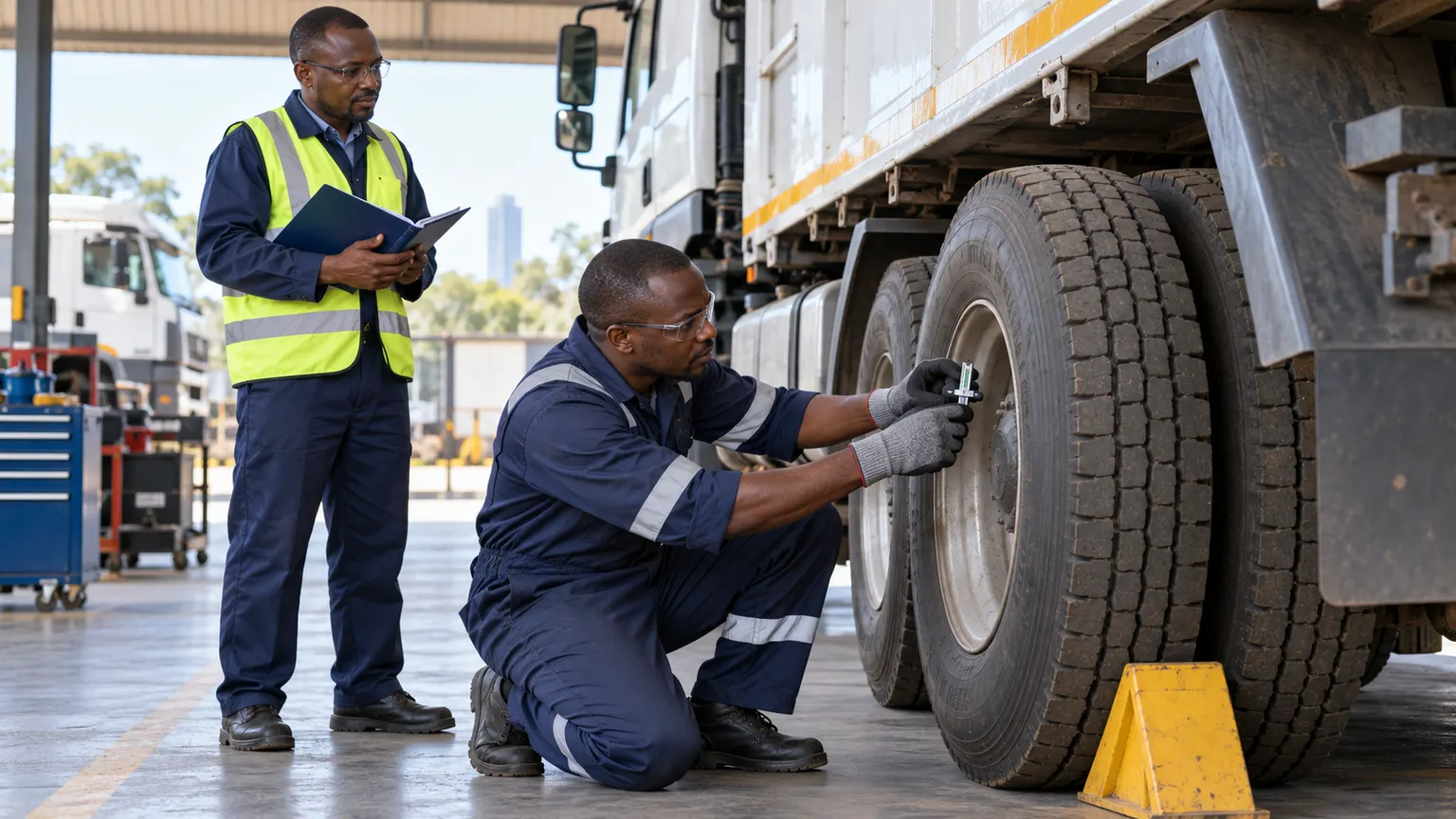
A useful tyre record follows both the physical tyre and the position where it works. Record when it was fitted, inspected, moved and removed, with the supporting readings and costs. “Two rear tyres replaced” records spending, but leaves the next workshop visit without enough history to explain a repeat problem.
Start with the actual axle and wheel layout
Identify the powered vehicle and each trailer separately. Confirm the actual axle order, steering and driven positions, and whether each wheel end has single or dual tyres. Use plain descriptions such as “axle 2, left outer” alongside any workshop code. Agree that left and right are viewed in the vehicle's normal direction of travel.
Do not copy a drawing from a similar-looking truck without checking its fitment. A dual assembly contains two tyres at that wheel end; each needs its own record. Coupling a trailer to a different truck should not make the trailer's tyre history disappear.
Keep the part identity separate from the position
The position stays with the vehicle. The physical tyre can move. Keep an identifier that the workshop can reliably match to the tyre, together with its recorded make, model, size and relevant specification. Avoid using an invoice description as the only way to distinguish several identical tyres.
- Fitting: part identity, vehicle, position, date and supported odometer.
- Inspection: date, position, measured reading and condition notes.
- Movement: the old and new positions, date and reading where available.
- Removal: date, reason, condition and the tyre's next destination.
- Work order: the related job, parts cost and work actually completed.
Keep inspection readings with the specification used to interpret them. A millimetre value without the measurement location or applicable reference is difficult to compare. The same principle applies to fitted brake parts, hoses and other components.
Use inspections to explain the history
Record what was observed rather than only “checked”. Distinguish a measurement, an observed condition and a technician's diagnosis. Michelin's commercial tyre wear guidance treats wear patterns in the context of position and operating conditions. It supports using records to investigate recurring conditions; a pattern alone does not establish a cause.
Have qualified personnel perform the inspection and use the tyre and vehicle manufacturers' applicable guidance. A blog checklist cannot decide whether a particular tyre is safe to keep in service. Record the inspection decision and any dispatch restriction in the appropriate operational workflow.
A simple cost-per-kilometre example
Suppose a tyre costs KES 42,000 and has a supported 70,000 km of service before removal. For this hypothetical purchase-cost-only measure, 42,000 ÷ 70,000 = KES 0.60 per km. The figures are illustrative, not a tyre price or life expectation.
State whether fitting, repairs, retreading and any residual value are included. If the tyre moved between vehicles, add only the supported distance from its own installation periods. A vehicle's lifetime odometer is not the tyre's distance. With an unknown fitting reading, keep the recorded cost but leave lifetime cost per km unconfirmed.
Compare similar parts doing similar work
Separate steer, drive and trailer positions. Consider specification, application, load and the reason for removal before comparing service life. A tyre removed after accidental damage is a different case from one that reached its service limit through wear. One short life is a case to review, not enough evidence to rank an entire supplier.
Look for two different patterns: a physical part with repeated problems after it moves, and a vehicle position that repeatedly needs attention with different parts. Either can help the workshop ask a better question. The inspection establishes what work is needed.
Connect the record to the work order
Link the fitting or removal to the job that authorised the work. Retain the reason, actual parts and labour costs, completed findings and follow-up. This connects the workshop's evidence with the vehicle's cost per kilometre and avoids reconstructing repairs from invoices alone.
Kora records work orders and parts costs, with position-based fitted-part history and maintenance comparisons on Pro and eligible Enterprise packages. These records support human maintenance decisions; they do not provide an automatic mechanical diagnosis or order replacement stock. Pair them with pre-trip inspections and a consistent maintenance record process.